The Future of Low-Code: Where Power Apps Is Heading in 2025–2030
Low-code is no longer a trend — it’s the new backbone of digital transformation. By 2030, over 65% of business applications are predicted to be built using low-code platforms, and Microsoft Power Apps is positioned at the center of this revolution.
As enterprises demand faster development, integrated automation, and AI-powered experiences, Power Apps is evolving from a simple app builder into a full-scale business application platform. Here’s what the future looks like for Power Apps between 2025 and 2030—and why businesses, IT teams, and citizen developers should start preparing now.
1. AI-Native App Building Will Become the Default
AI will not just support app makers — it will build the apps.
Between 2025–2030, expect Power Apps to shift toward:
AI-generated screens and layouts
AI-assisted Dataverse schema creation
Copilot auto-building workflows
Natural language-to-app creation
Predictive formulas (Power Fx suggestions)
You’ll describe an app in English, and Power Apps will generate:
tables,
forms,
logic,
screens,
validations.
Developers will evolve into refiners instead of builders.
2. Deep Integration Across the Microsoft Ecosystem
By 2030, Power Apps will be the “frontend” layer for Microsoft’s entire cloud ecosystem.
Expect tighter integration with:
Microsoft Fabric (analytics + apps + automation)
Azure OpenAI, Azure API Management
Dynamics 365
Teams as the default distribution platform
Microsoft Security & Compliance Center
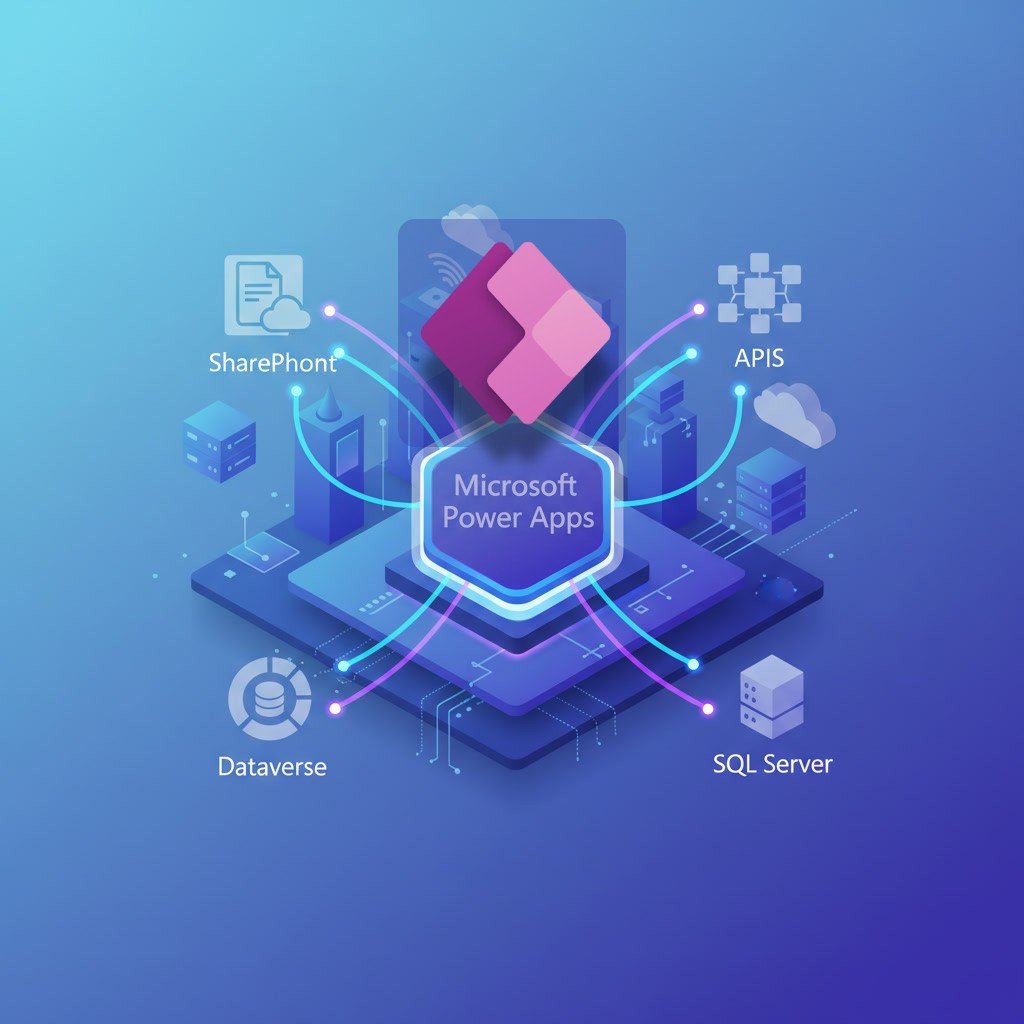
Power Apps will become the experience layer connecting data, automation, and analytics.
3. Power Apps Will Shift Toward “Enterprise-Ready by Default”
Large organizations want:
Governance
Security
Scalability
Version control
Advanced ALM
Audit trails
Microsoft is already heading this way, and by 2030:
Solutions will be the mandatory packaging model
Automated ALM pipelines will be built-in
Environment governance will be AI-managed
Complex apps will rely heavily on Dataverse
Citizen developers will build apps quickly, while enterprise IT governs at scale.
4. The Rise of Fusion Development Teams
The future belongs to fusion teams—hybrid groups where:
Power Apps makers
Data analysts
Pro developers
Business owners
…all work together on enterprise low-code solutions.
Fusion development will become the standard model for:
ERPs built on Power Platform
Custom CRMs
Enterprise workflow automation
Mobile workforce solutions
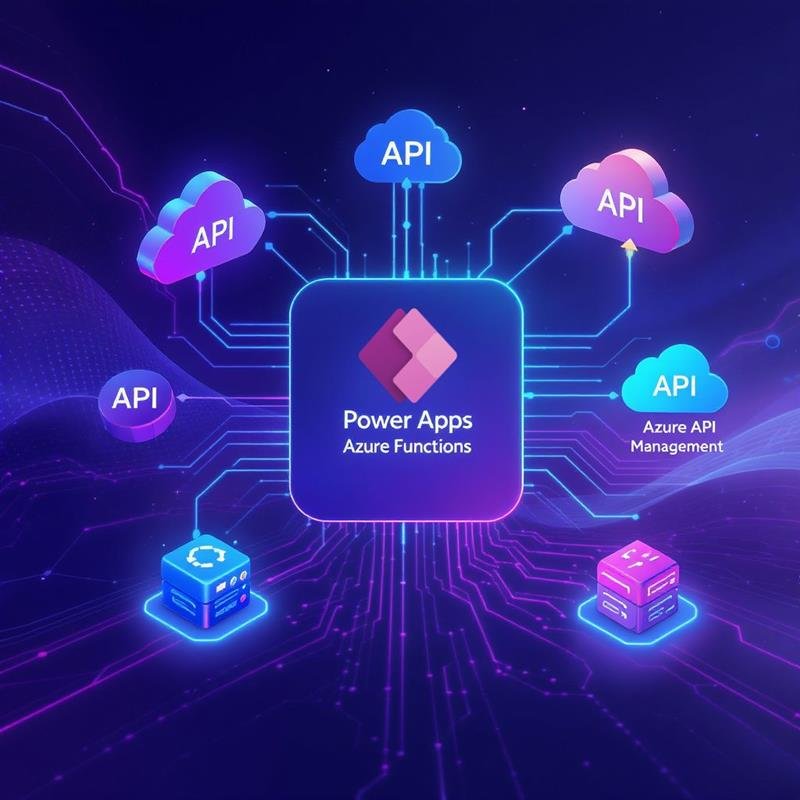
Pro devs will increasingly extend Power Apps using:
Custom connectors
Azure Functions
API integrations
Plugins & Dataverse extensibility
Low-code ≠ no code — it becomes collaborative code.
5. Power Apps Will Replace Many Legacy Line-of-Business Applications
A massive wave of legacy systems is reaching end-of-life:
InfoPath
Lotus Notes
Access databases
On-prem forms
Excel-based workflows
By 2030, Power Apps will become the default replacement for:
Internal portals
HR forms
Field inspection systems
Approval workflows
Asset management tools
Department automation solutions
Companies will adopt low-code modernization plans as a core IT strategy.
If you're planning to build smarter, AI-driven, enterprise-ready apps, our Power Apps Training gives you the end-to-end skills you need — Dataverse, automation, integrations, governance, and solution design.
6. Hyperautomation Will Be the New Normal
Power Apps + Power Automate + Copilot Studio + Power BI = End-to-end business automation.
By 2030:
Apps will trigger autonomous workflows
Workflows will trigger AI agents
AI agents will update Dataverse
Dataverse will sync to BI dashboards automatically
This creates a self-updating business system where manual tasks shrink by 70–80%.
7. Security, Compliance & Governance Will Mature Significantly
Expect:
Zero-trust integrations
Environment-level AI threat detection
Automated data loss prevention (DLP) routing
Centralized auditing
AI-powered monitoring of app behavior
Security will be baked in, not bolted on.
8. Low-Code Will Become a Core Skill in Every Job Role
By 2030:
Every project manager
Every HR analyst
Every operations lead
Every finance controller
Every business analyst
…will be expected to know how to automate, build simple apps, and collaborate with IT. Low-code will be as essential as Excel is today.
What This Means for You (2025–2030 Skill Roadmap)
To stay ahead of the Power Apps future, focus on:
Dataverse
The central database of all serious enterprise apps.
Power Automate
Workflow automation will sit behind every functional app.
Power Fx
Formula language skills remain the foundation.
API Integration
Every enterprise solution will require connections.
AI skills
Prompt engineering + AI-driven app design will become mandatory.
Professionals who master the full Microsoft Power Platform stack will become high-value architects in the next decade.
Conclusion: The Future of Power Apps Is Bigger Than App Building
Between 2025 and 2030, Power Apps will evolve into a complete digital transformation engine, combining:
AI
Automation
Data
UX
Governance
Cloud integration
Low-code won’t just build apps — it will reshape how organizations run their operations.
Those who learn Power Apps today will be the leaders of tomorrow’s digital-first enterprises.
Editor’s Note
If you want to prepare for this future and start building enterprise-ready automation solutions, our Power Apps + Power Automate Training (On-Cloud BI & Automation) is the perfect next step.
It teaches you how to build real-world apps using Dataverse, SQL, SharePoint, APIs… and automate them end-to-end using Power Automate. A future-proof skillset for a future where low-code becomes the global standard.








 Power BI
 SQL
SQL Power Apps
 Power Automate
 Microsoft Fabrics
 Azure Data Engineering